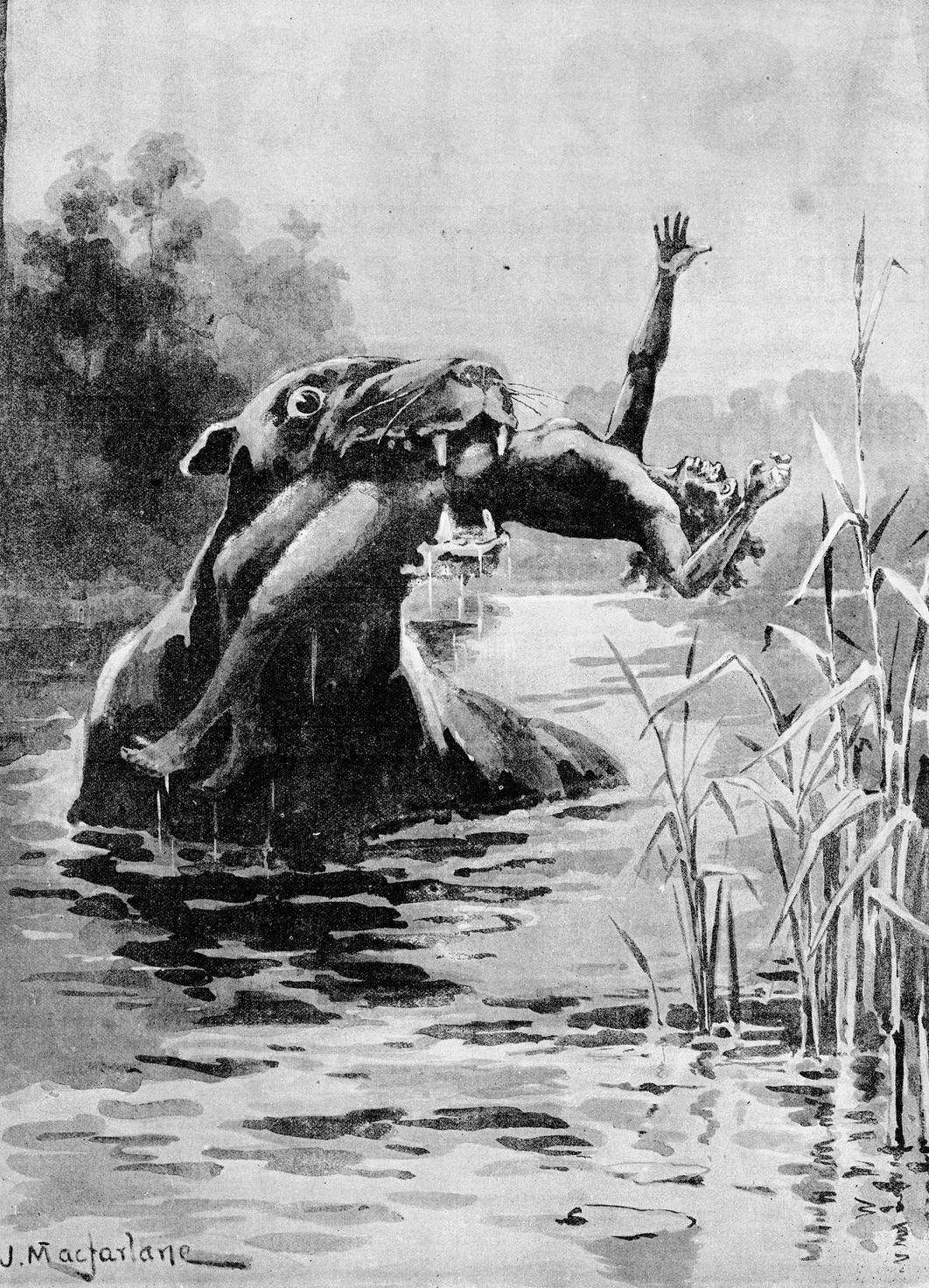
Australia’s Legendary Swamp Monster
Deep in the wetlands, billabongs, and murky rivers of southeastern Australia lurks one of the continent’s most enduring legends: the bunyip. Rooted in the Dreamtime stories of Aboriginal peoples, this amphibious creature has terrified and fascinated generations. Translated roughly as “devil” or “evil spirit” in languages like Wemba-Wemba and Wergaia, the bunyip embodies the dangers of unfamiliar waters — a nocturnal beast that roars across the night and drags the unwary to their doom. Yet in some traditions, it serves as a guardian, punishing overfishing or teaching respect for the land. European settlers, encountering tales of this “monster” alongside kangaroos and platypuses, took the stories seriously enough to launch expeditions and exhibit supposed evidence. Though no physical proof has ever been confirmed, the bunyip remains a cornerstone of Australian folklore.
Aboriginal accounts describe the bunyip as a reclusive water spirit that rarely ventures onto land. It swims swiftly with flippers or fins, feeds primarily on crayfish, and emits a booming or bellowing cry that echoes through the outback. Physical descriptions vary wildly across tribes and regions — a hallmark of oral traditions passed down for thousands of years. Some portray it as seal- or dog-like: 4–6 feet long, shaggy black or brown fur, a round bulldog head, prominent ears, and whiskers. Others depict a larger, long-necked version (5–15 feet) with a horse- or emu-like head, small tusks, a maned neck, and a horse-like tail. Still more accounts mention starfish-like forms, owl-like snouts, scales, horns, or even blue eggs laid in platypus nests.
In many stories, the bunyip is a predator with a taste for humans — especially women and children — “hugging” victims to death or pulling them underwater. Aboriginal people avoided certain waterholes for fear of it, and tales recount specific killings, such as a woman slain near Geelong or wounds inflicted by its claws. Yet in Ngarrindjeri lore, the bunyip (known as Mulyawonk) acts as a protector: it enforces sustainable fishing and warns children away from dangerous rivers, ensuring the survival of people and country. This duality — monster or moral teacher — highlights its cultural depth beyond mere horror.
European interest exploded in the 19th century as settlers blended Aboriginal warnings with their own unfamiliarity with the Australian bush. The word “bunyip” (or “bahnyip”) first appeared in print in 1812 in the “Sydney Gazette”, describing a “large black animal like a seal, with a terrible voice which creates terror among the blacks.” Explorer Hamilton Hume and James Meehan reportedly found large unexplained bones in a New South Wales lake in 1818, fueling speculation that the creature was real.
The 1845 “Geelong Advertiser” article “Wonderful Discovery of a New Animal” marked a turning point. Fossils unearthed near Geelong were shown to an Aboriginal man, who immediately identified them as belonging to the bunyip. He sketched a creature uniting “the characteristics of a bird and of an alligator” — emu-like head with a long serrated bill, alligator body, and frog-like swimming gait — and claimed it measured 12–13 feet. He also recounted a woman killed by one at Barwon Lakes and showed deep claw wounds on his own chest from an encounter. The story sparked “bunyip-mania.”
In 1846–1847, a strange skull pulled from the Murrumbidgee River near Balranald was hailed as a bunyip relic by locals. Exhibited at the Australian Museum in Sydney (then the Sydney Museum), it drew crowds and triggered a wave of new sightings. The skull later proved to be a deformed foetal horse or calf, but the damage was done: newspapers buzzed with reports of black shapes in the water and eerie roars. One 1847 account described a creature “sunning himself” on the Yarra River opposite Melbourne’s Custom House before vanishing when approached.
Other notable reports followed. In 1850 near Bromelton in what is now Queensland, a woman claimed to see a huge horned beast with eel-like features and a platypus bill at a waterhole. In 1857, artist Edwin Stocqueler sketched what he called a “large freshwater seal” on the Murray and Goulburn rivers — glossy black, 5–15 feet long, with a long neck, dog head, and flippers — and fired at several specimens (missing them all). Aboriginal witnesses confirmed it as related to the bunyip. Escaped convict William Buckley, living among Aboriginal groups near Melbourne in the early 1800s, described calf-sized amphibious creatures with grey feathers that had killed a woman.
Sightings continued into the 20th century. In the 1930s, railway workers fled a swamp after hearing unearthly noises. The 1941 “Thargomindah Bunyip” made national headlines with multiple reports of a mysterious creature at Dynevor Lakes in Queensland. The 1960s “Burrawang Bunyip” was blamed for bull-like roars echoing from a swamp, and 1971 newspapers covered six alleged sightings at a New South Wales lagoon. While most were anecdotal and unverified, the sheer volume kept the legend alive.
Scientists and folklorists have offered several rational explanations for the bunyip, none requiring an undiscovered monster. The most widely accepted theory, proposed by geologist Charles Fenner in his 1933 book “Bunyips and Billabongs”, points to real animals: seals. Southern elephant seals or leopard seals occasionally venture far inland via the Murray and Darling river systems. Historical records confirm seals reaching places like Overland Corner and Loxton. Their smooth fur, prominent eyes, and distinctive bellowing cries match many descriptions perfectly — especially the seal-like or dog-headed variants.
Another compelling idea links the bunyip to Australia’s extinct megafauna. Aboriginal ancestors coexisted with giant marsupials such as “Diprotodon” (a rhinoceros-sized wombat), “Zygomaturus”, and “Palorchestes” (a marsupial tapir) until roughly 40,000–50,000 years ago. Stories of these massive, sometimes semi-aquatic beasts could have evolved into bunyip lore over millennia, much like European dragon myths arose from dinosaur fossils. Paleontologists George Bennett (1871) and later Pat Vickers-Rich and Neil Archbold supported this “cultural memory” hypothesis.
Other theories include misidentification of known animals. In 2017, ornithologist Karl Brandt suggested the 1845 Geelong description actually matched the southern cassowary — a large, aggressive bird with blue eggs, deadly claws, an emu-like head, and a serrated beak. The shy Australasian bittern, nicknamed the “bunyip bird,” produces a low booming call that could explain the haunting cries. Some “skulls” were simply deformed horse or cow remains, and settler reports were likely amplified by rum, fear, and the thrill of discovering “new” creatures in a strange land.
More recent scholarship views the bunyip’s evolution as “monster radiation” — the legend diversifying into spiritual guardians (Mulyawonk), extinct cryptids, and cuddly children’s-book versions over time. Ultimately, the bunyip probably combines genuine observations, ancient memories, and the human tendency to mythologize the unknown.
Today, the bunyip has transcended fear to become a beloved symbol of Australian identity. It names towns, rivers, and even a political insult (“bunyip aristocracy” for social climbers). From classic books like “The Bunyip of Berkeley’s Creek” to tourism statues and video games, it lives on as a gentle giant or wise spirit rather than a child-devouring horror. While no credible evidence supports its existence as a living creature, the bunyip endures because it captures something timeless: the mystery of Australia’s wild waterways and the power of storytelling to warn, entertain, and connect people to their land.
Whether a seal in the wrong river, a faded memory of megafauna, or pure folklore, the bunyip reminds us that some monsters are best left to the imagination — roaring faintly from the billabongs on quiet nights.