Retired U.S. Air Force Maj. Gen. William Neil “Neil” McCasland walked out of his Albuquerque, New Mexico, home on the morning of February 27, 2026, and has not been seen since. The 68-year-old former commander of the Air Force Research Laboratory (AFRL) at Wright-Patterson Air Force Base left behind his phone, prescription glasses, and wearable fitness devices — items the experienced hiker and outdoorsman rarely traveled without.
Authorities describe the disappearance as highly unusual. McCasland’s wife, Susan McCasland Wilkerson, returned home around noon after an appointment to find him gone. A repairman had seen him shortly before 11 a.m. He took his wallet, a .38-caliber revolver in a leather holster, and a red backpack, but left no note. A gray U.S. Air Force sweatshirt was later found about 1.25 miles east of the residence; family members have not confirmed it belongs to him. Hiking boots and a shirt possibly linked to him were recovered at the couple’s second home in Pagosa Springs, Colorado.
The Bernalillo County Sheriff’s Office, assisted by the FBI, U.S. military, federal agencies, and New Mexico search-and-rescue teams, has canvassed more than 700 homes, reviewed dozens of surveillance videos, and flown helicopters and drones over rugged terrain. A Silver Alert was issued due to McCasland’s reported “mental fog” in recent months, though investigators emphasize he showed no signs of disorientation. “Arguably, he would still be the most intelligent person in the room that any of us would be in,” Lt. Kyle Woods told reporters. Unseasonably warm weather has complicated infrared searches by creating false heat signatures. As of mid-March 2026, more than two weeks after he vanished, no trace of foul play has been found — but nothing has been ruled out.
McCasland’s military record is impeccable. Commissioned in 1979 after graduating from the U.S. Air Force Academy with a bachelor’s degree in astronautical engineering, he earned a Ph.D. in the same field from the Massachusetts Institute of Technology. Over 34 years of service, he held key roles in space research, acquisition, and operations within the Air Force and the National Reconnaissance Office. He commanded the Phillips Research Site at Kirtland Air Force Base in New Mexico, served as vice commander of both the Ogden Air Logistics Center and the Space and Missile Systems Center, and held senior Pentagon positions directing space acquisition and special programs.
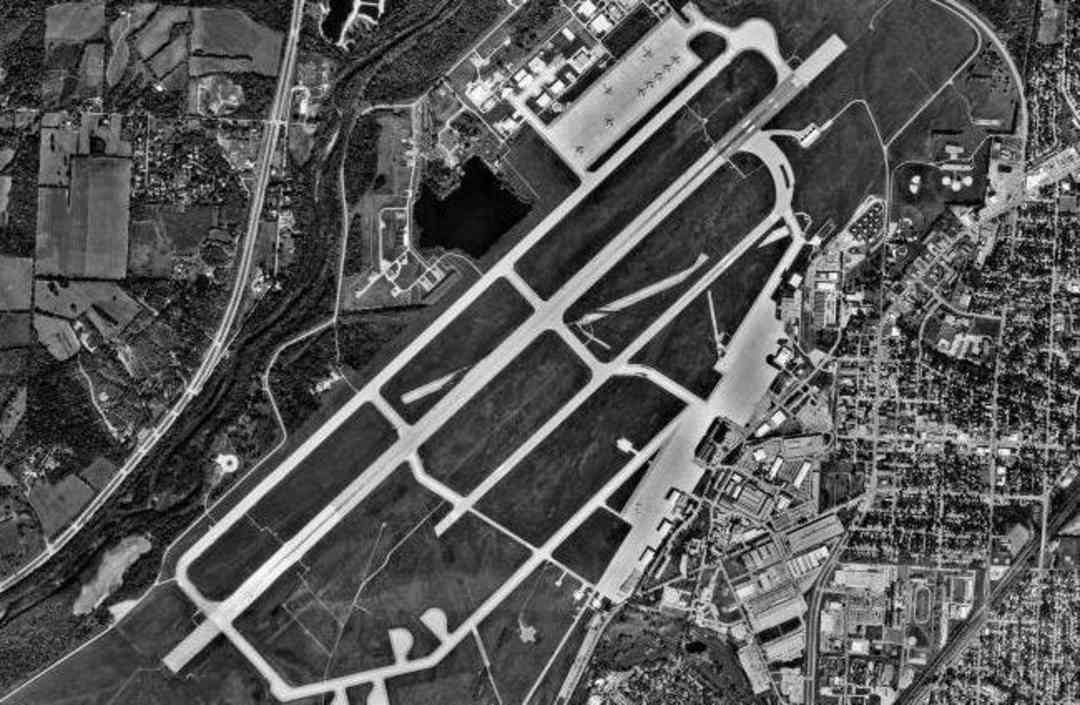
From 2011 until his retirement in 2013, McCasland commanded the Air Force Research Laboratory at Wright-Patterson Air Force Base, Ohio, overseeing billions of dollars in science and technology programs and more than 10,000 personnel. The laboratory develops everything from advanced aircraft materials and propulsion systems to cutting-edge intelligence technologies.
Wright-Patterson’s deep ties to UFO (or UAP — unidentified anomalous phenomena) theories stretch back decades, drawing renewed scrutiny to McCasland’s case. The base, near Dayton, Ohio, has long been rumored as the final resting place for debris and even “non-human” remains from the 1947 Roswell incident. Conspiracy lore centers on “Hangar 18,” where — according to persistent claims — extraterrestrial technology was studied.
The base also served as the headquarters for Project Blue Book, the Air Force’s official UFO investigation program from the early 1950s through 1969, which reviewed more than 12,000 sightings. While the Air Force has repeatedly denied storing alien bodies or technology — directing all inquiries to the Department of Defense — the rumors have never fully died. Modern disclosures, including Pentagon-released videos of unexplained aerial objects and congressional hearings featuring whistleblowers, have only amplified interest.
The laboratory McCasland once led is described by former insiders as “where all the super secret research happens.” Luis Elizondo, a former Pentagon intelligence official, has called it the “center of gravity” for advanced aerospace work.
After retiring, McCasland briefly served as an unpaid technical consultant to musician Tom DeLonge’s To The Stars Academy, a project exploring unexplained phenomena through entertainment and research. His name surfaced in 2016 WikiLeaks emails related to DeLonge’s outreach to government officials, including former White House staffer John Podesta. Some in the UFO community speculate his knowledge of sensitive programs could be relevant.
Rep. Eric Burlison (R-Mo.) recently described McCasland as someone who “has a lot of information” on UAPs and called the disappearance “really disturbing.” Yet McCasland’s wife has pushed back firmly on social media, stating that his involvement with DeLonge was limited and fictional in nature. “Neil does not have any special knowledge about the ET bodies and debris from the Roswell crash stored at Wright-Patt,” she wrote, while acknowledging the “mental fog” he had mentioned but rejecting wilder theories.
Investigators insist there is no evidence linking the disappearance to UFO research, the base, or any classified matters. “We’ll look into everything,” Bernalillo County Sheriff John Allen said, “but we deal in facts.”
As the search continues with no new leads, the case of the missing general has reignited fascination with one of the Air Force’s most storied installations — and the enduring mysteries that surround both the man and the base he once commanded. Anyone with information is urged to contact the Bernalillo County Sheriff’s Office or the FBI.